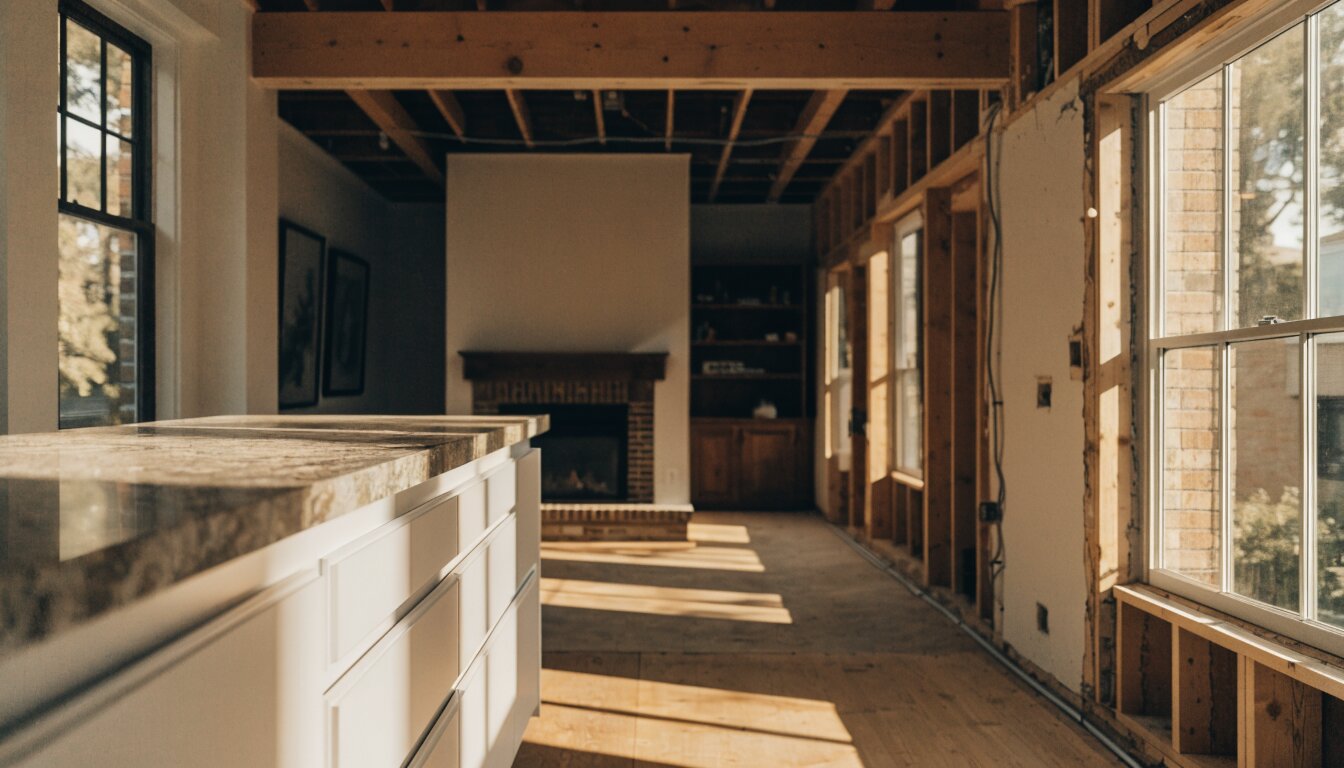
Renovation projects in Metro Vancouver run larger than in most Canadian cities. A kitchen renovation starts at $40,000. A basement suite runs $80,000 to $180,000. A full home renovation can reach $500,000. At those numbers, cash funding is the exception. Most homeowners borrow.
Three instruments cover most Vancouver renovation financing: a home equity line of credit (HELOC), mortgage refinancing, and personal loans or unsecured lines of credit. Each has a different rate profile, approval timeline, and best-fit scenario. BC and federal rebate programs can offset costs on energy-efficient work but require planning before the work starts.
For project cost context alongside these financing options, see the pricing guide or the renovation financing overview.
Comparing Your Options
| Instrument | Rate Type | Flexibility | Best For |
|---|---|---|---|
| HELOC | Variable (prime + 0.5–1%) | Draw as needed, reusable credit | Phased renovations, uncertain timeline |
| Mortgage refinance | Fixed or variable | Lump sum at closing | Large single-scope projects, rate lock needed |
| Personal / unsecured LOC | Variable (prime + 3–8%) | Fast approval, no equity required | Scopes under $40K, limited home equity |
Each instrument requires different documents and has different lender approval timelines. The right choice depends on your equity position, project scope, and risk tolerance on rate movement.
Home Equity Line of Credit (HELOC)

A HELOC draws against the equity in your home. In BC, most lenders cap the combined loan-to-value at 80 percent. If your home is assessed at $1.2 million and you carry a $600,000 mortgage, you could access up to $360,000 through a HELOC.
Interest is charged only on what you draw. This makes a HELOC well-suited for phased renovations — a bathroom one quarter, a kitchen the next — where you want capital available without paying interest on the full amount from day one.
HELOC rates currently run at prime plus 0.5 to 1 percent. Variable rate: rate changes move directly to your borrowing cost. If you are planning a 12-month renovation with draws spread across the year, build in room for rate movement.
Lenders require a home appraisal before approving a HELOC. Factor in appraisal costs ($300 to $600) and approval timelines (two to four weeks after appraisal completes) when building your renovation schedule. Some lenders will not advance funds for work without a permit on file.
Mortgage Refinancing

Refinancing replaces your current mortgage with a new one at a higher principal. The difference comes to you as cash. The new mortgage can be fixed or variable, and the term and amortization reset from the refinancing date.
This works best for large single-scope renovations where you want a locked rate over the project period. A fixed-rate refinance on a $250,000 full home renovation locks your borrowing cost for three to five years.
The risk: breaking a fixed-rate mortgage early triggers an interest rate differential (IRD) penalty. Major Canadian banks calculate IRD on the posted rate, which typically overstates the real penalty. Check your current contract before assuming refinancing is the cheapest path. A mortgage broker can run the penalty calculation before you commit.
Refinancing also resets your amortization. If you are 10 years into a 25-year mortgage and refinance, you may extend your debt horizon even if the monthly payment looks similar.
Personal Loans and Unsecured Lines of Credit
For scopes under $40,000, or for homeowners without sufficient equity, personal loans and unsecured lines of credit provide faster access to capital. No appraisal. No property registration. Approval in days.
The trade-off is rate: unsecured lending runs prime plus 3 to 8 percent — well above a HELOC or refinance. For a $30,000 bathroom renovation, the rate differential is manageable. For a $150,000 project, it compounds fast.
Credit unions in BC sometimes offer renovation-specific products at lower rates than major banks. If your credit history is strong and the scope is contained, compare credit union options before settling on the bank rate.
BC and Federal Rebates for Energy-Efficient Upgrades
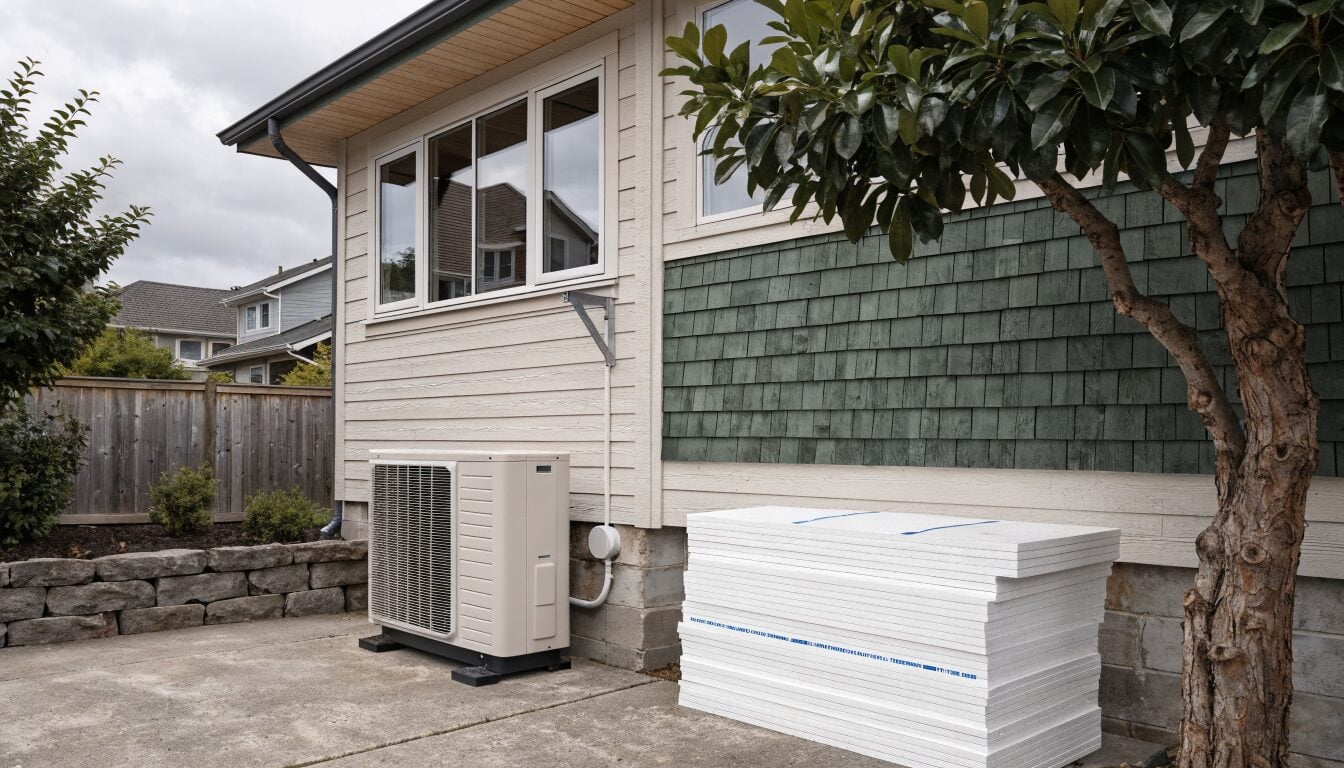
Renovation work that improves energy efficiency can qualify for rebates that reduce the net cost of the project.
Canada Greener Homes Grant provides up to $5,000 for eligible retrofits: heat pump installation, insulation upgrades, windows and doors, air sealing. A pre-retrofit EnerGuide assessment is required before work begins. Apply before starting. Retroactive applications are not accepted.
BC Hydro rebates cover heat pumps, heat pump water heaters, EV chargers, and smart thermostats. Heat pump rebates range from $1,000 to $6,000 depending on system type and current heating source. No pre-assessment required. These process faster than the federal program.
FortisBC rebates apply to natural gas customers switching to heat pumps or upgrading insulation. These can stack with BC Hydro rebates on qualifying work.
CleanBC covers heat pumps, insulation, and windows — also stackable with utility rebates. Combined rebate value on a qualifying heat pump installation can reach $8,000 to $10,000.
For renovation work that triggers BC Energy Step Code compliance — additions over 10 percent of existing floor area, major mechanical replacements — the required efficiency improvements often overlap with rebate-eligible work. An energy advisor identifies where compliance and rebate eligibility align before the work starts.
What Lenders Ask For
Lenders approving renovation financing want evidence that the work is scoped, costed, and permitted.
Detailed scope of work. A single-line "kitchen renovation" is not sufficient. Lenders want to see what trades are involved, what materials are specified, what permits apply.
Contractor credentials. Licensed, insured, WorkSafeBC registered. Some lenders require a current WCB clearance letter and proof of liability before advancing funds.
Line-item cost breakdown. A lump-sum quote does not tell the lender what the money covers. A breakdown by trade — materials, labour, permit fees, contingency — gives the underwriter a document they can review with confidence. This is where many renovation financing applications stall.
Permit documentation. Lenders increasingly require confirmation the permit is applied for or issued. Some will not fund unpermitted scopes at all.
How a Line-Item Quote Simplifies the Lender Conversation
Most renovation quotes in Metro Vancouver arrive as a single number. "Kitchen renovation: $85,000." That tells the homeowner a total. It tells the lender almost nothing.
A line-item quote separates demolition, plumbing rough-in and final, electrical rough-in and final, cabinetry supply and installation, countertop fabrication and installation, tile, permit fees, and contingency. Each trade is priced independently. Materials are separated from labour. The permit fee is a disclosed line item, not absorbed into round totals.
Every RenoPro estimate is line-item by trade. That document goes to the lender, to the strata council for strata approvals, and to the permit application. One document serves the full approval chain. The lender conversation becomes shorter when the quote already answers the questions the underwriter was going to ask.
For how renovation payments are structured in BC, including the statutory 10% holdback, see renovation payment schedules in BC.
Get a line-item quote for your renovation. See current price ranges at the pricing guide.